WLD Trades Nearly 98% Below Peak As Supply Pressure Keeps Bulls Cautious



WLD has fallen almost 98% from its all-time high, turning one of crypto’s most visible AI-linked identity tokens into a test case for how badly supply pressure can weigh on a high-profile project. CoinGecko data places WLD’s all-time high at $11.74 and the token is now trading near $0.24, leaving it roughly 97.9% below that peak.
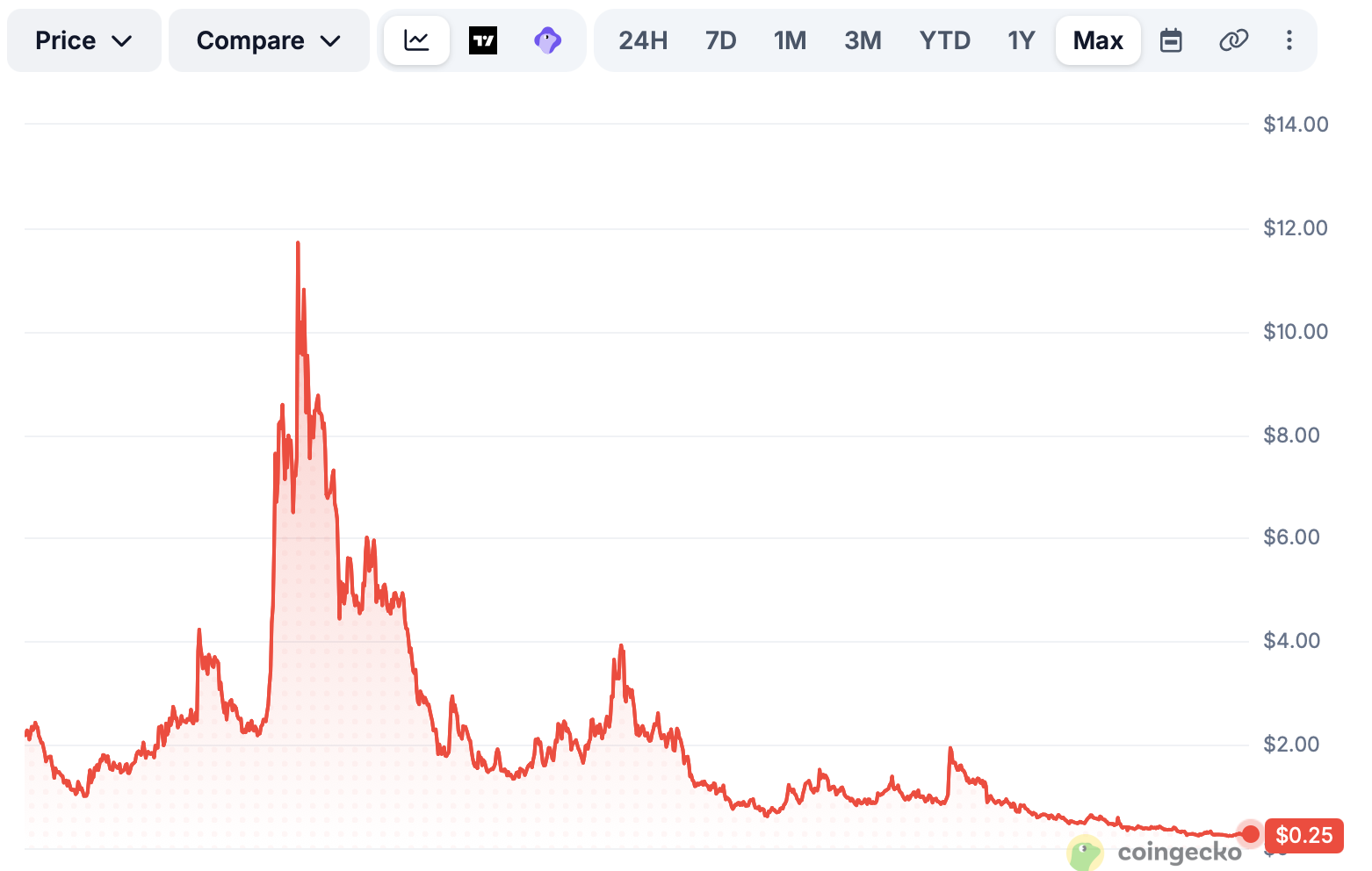
The scale of the drawdown makes the token look cheap on a headline chart, but the current setup is more complicated than a simple “down big, buy low” trade. WLD still carries a large supply overhang, and the market has spent months trying to absorb daily unlocks from community, team and investor allocations. A lower token price can attract dip buyers, but it can also reflect a market that has not yet found enough demand to absorb new circulating supply.
The strongest verified supply update came from World’s April tokenomics milestone. World said the WLD unlock rate will fall 43% on July 24, dropping total daily unlocks from about 5.1 million WLD to 2.9 million WLD. The same update said 4.9 billion WLD, or 49% of the 10 billion total supply, was already unlocked as of April 10, with 3.3 billion WLD in active circulation.
Team And Investor Unlocks Remain Part Of The Debate
The latest public data does not support a clean claim that team and investor tokens are already almost completely sold. World’s own update says TFH investor and team unlocks are still scheduled to continue, falling from about 1.9 million WLD per day to 1.3 million WLD per day after July 24. That still matters for traders because even a slower unlock rate can keep pressure on price if spot demand remains weak.
WLD’s earlier tokenomics changes were designed to reduce pressure from sudden supply expansion. World extended lockups for early contributors in 2024, lowering the daily unlock amount for TFH investors and team members from about 3.3 million WLD to 2 million WLD starting in July 2024. The July 2026 cut will slow that flow again, but it does not remove the broader market question: who is absorbing the unlocked supply, and at what price?
That is why the token’s fall cannot be judged only by percentage loss from the top. A 98% decline can create asymmetric upside if demand returns, but it can also trap buyers when supply, sentiment and liquidity remain weak. The project still has a major AI-era identity narrative, but the token needs market structure, not only branding, to rebuild confidence.
Negative Funding Is Not A Bullish Signal By Itself
Some traders are also watching WLD derivatives because negative funding can make a market look heavily shorted. That signal needs caution. CoinGlass data tracks WLD futures open interest above $145 million, with futures volume far above spot volume, showing that derivatives still play a large role in the token’s price action.
Negative funding can mean shorts are crowded, but it can also reflect weak demand, hedged positions or traders paying to maintain bearish exposure during a downtrend. It is not proof that a short squeeze is coming. For WLD, a better confirmation would be spot-led buying, rising volume, a reclaim of broken resistance and reduced sensitivity to unlock headlines.
The next meaningful shift comes in July, when the daily unlock rate is scheduled to decline. Until then, WLD remains a high-risk rebound trade rather than a clean value setup. The key numbers are blunt: a token near $0.24, a peak near $11.74, 49% of supply unlocked as of April, and daily emissions still running until the next reduction. Buyers trying to catch the bottom need evidence that demand is finally absorbing supply, not only a chart that looks cheap after a historic collapse.
The post WLD Trades Nearly 98% Below Peak As Supply Pressure Keeps Bulls Cautious appeared first on Crypto Adventure.