Qivalis Euro Stablecoin Gains 37-Bank Backing As Europe Targets Dollar Dominance
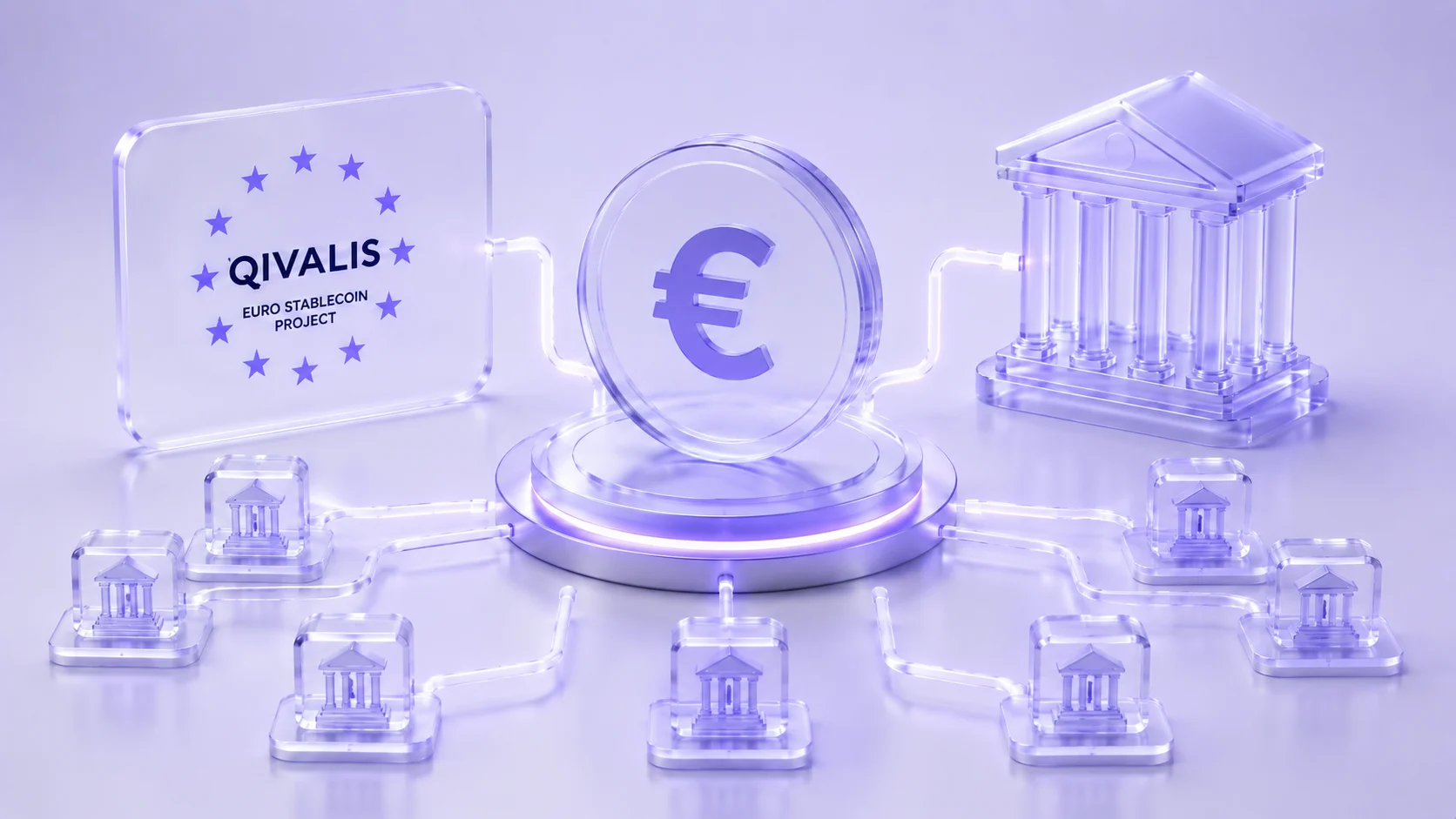

Amsterdam-based Qivalis has become one of Europe’s most visible euro stablecoin efforts after expanding its banking consortium to 37 financial institutions across 15 countries.
The project added 25 new banks, including ABN AMRO, Rabobank, Banco Sabadell, Bankinter, Bank of Ireland, Handelsbanken, Nordea, Intesa Sanpaolo, Erste Group and Swedbank. They join earlier consortium members including ING, BNP Paribas, BBVA, CaixaBank, Danske Bank, DekaBank, DZ BANK, KBC, Raiffeisen Bank International, SEB and UniCredit.
The expansion gives Qivalis broader distribution before launch and places major European lenders behind a regulated euro-denominated stablecoin at a time when dollar-based tokens still dominate crypto settlement. Bank of Ireland’s entry into the consortium came alongside confirmation that Qivalis is pursuing authorisation from the Dutch Central Bank as an Electronic Money Institution and plans to operate under the EU’s MiCA crypto-asset framework.
Europe Pushes For Euro-Native Onchain Settlement
Qivalis is designed as a fully backed euro stablecoin for payments, settlement and tokenized-asset infrastructure rather than a retail crypto trading token alone. The project’s model centers on a full-reserve structure, with the token intended to be backed 1:1 by euros and high-quality liquid assets held with regulated custodians.
The project has not issued a token yet. Qivalis’ own security notice says official smart contract addresses will be published later, which leaves no valid public contract for users to interact with today.
The launch target remains the second half of 2026, subject to regulatory approval. ING framed the consortium’s larger bank base as a way to increase liquidity, distribution and adoption for euro settlement infrastructure, with participating banks positioned to help clients move value faster across borders and connect traditional banking rails with blockchain-based settlement.
The euro stablecoin market remains tiny compared with dollar stablecoins. Bank of Ireland placed euro-denominated tokens at only 0.2% of global stablecoin circulation, while Reuters cited Tether and Circle as the dominant dollar issuers, with their dollar-pegged tokens accounting for most live stablecoin liquidity.
That gap is the opening Qivalis is trying to narrow. A 37-bank consortium does not guarantee user demand, deep exchange liquidity or DeFi integration, but it gives Europe a bank-led structure for testing whether regulated euro stablecoins can move beyond policy ambition and into real payment, treasury and tokenization flows.
The post Qivalis Euro Stablecoin Gains 37-Bank Backing As Europe Targets Dollar Dominance appeared first on Crypto Adventure.