Russia Adds IP Address Reporting To Crypto Mining Registry
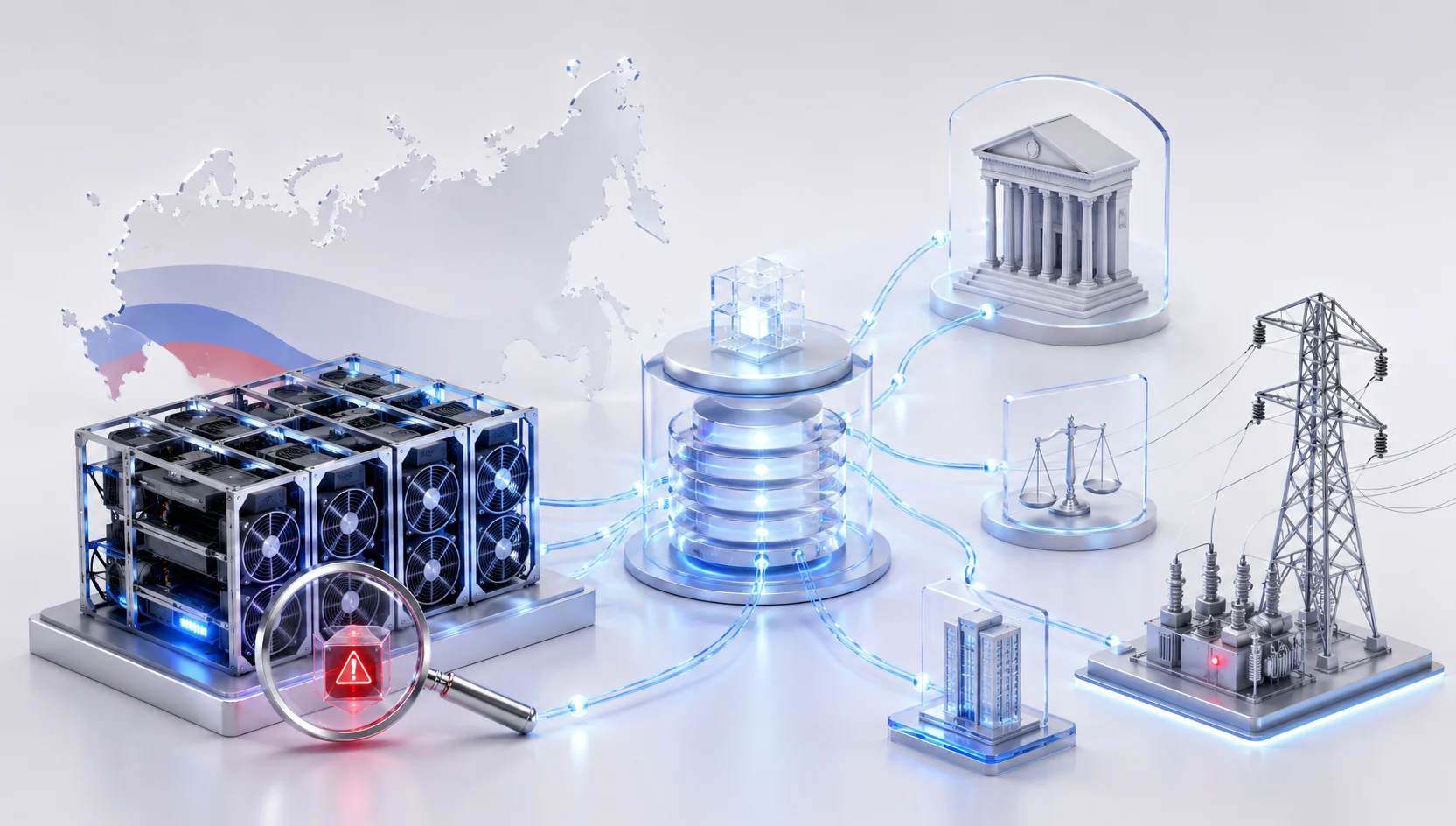

Russia is tightening oversight of crypto mining by adding network address data to the official registries used for miners and mining infrastructure operators.
From May 30, registry records for people and companies engaged in digital-currency mining will include the network addresses used during mining activity. The change follows Government Decree No. 556, dated May 16, and expands the information already collected through Russia’s mining registration system.
The new requirement targets the technical layer of mining operations. Miners and infrastructure operators will no longer be identified only by corporate, tax, energy and site data. Their ASIC-level network footprint can also become part of the state record, giving authorities another way to match declared operations against actual mining activity.
Russia’s Federal Tax Service operates the MiningRegistry service, which handles entries for miners and operators of mining infrastructure. Legal entities and individual entrepreneurs must be included in the registry before mining legally, while private individuals can mine without registration only if they remain below the government’s electricity-use cap. The current threshold is 6,000 kWh per month.
IP Data Adds Enforcement Pressure
The rule turns mining registration into a more technical compliance system. Registry entries can now connect a miner’s legal identity, energy connection point, territorial grid operator and network addresses used by mining equipment.
Russia’s Finance Ministry framed the change as a way to improve oversight of digital-asset operations and simplify investigations into violations. Industry coverage also noted that registry information can be accessed by state bodies, courts, the Bank of Russia and power-grid operators, while energy companies can use the data to monitor load in regions with heavy mining concentration.
That matters because illegal mining in Russia is not only a tax issue. It is also a power-grid issue. Mining farms can consume large amounts of electricity, and undeclared facilities can create pressure on local infrastructure without clear billing, reporting or grid planning.
Russia has already moved against mining in regions where electricity demand is politically and economically sensitive. Mining restrictions in several Siberian areas were introduced to reduce winter power shortages, while official estimates placed Russian crypto mining at about 16 billion kWh a year, or roughly 1.5% of national electricity consumption.
Mining Moves Further Inside State Control
The IP-address rule fits a broader shift from legalization toward tighter supervision. Russia legalized mining under a registration and tax framework, but the state is now adding more tools to identify undeclared miners, track industrial-scale operations and link mining infrastructure to energy consumption.
The same enforcement logic is visible outside Russia. In Brazil, police recently found a clandestine crypto mining farm linked to illegal electricity use, showing how mining can become a law-enforcement issue when power theft, territorial control or hidden facilities enter the picture.
For compliant Russian miners, the immediate impact is more reporting and less operational privacy. For unregistered operators, the risk is sharper: network-address data gives authorities another signal to compare against electricity usage, hosting records and tax filings.
Russia is not banning mining with this measure. It is making legal mining more traceable. The practical message is clear for the sector: miners that want access to Russia’s low-cost power and industrial infrastructure will have to accept a registry model that reaches deeper into hardware, grid usage and network-level activity.
The post Russia Adds IP Address Reporting To Crypto Mining Registry appeared first on Crypto Adventure.