Poland’s Sejm Approves MiCA Crypto Bill Giving KNF New Blocking Powers


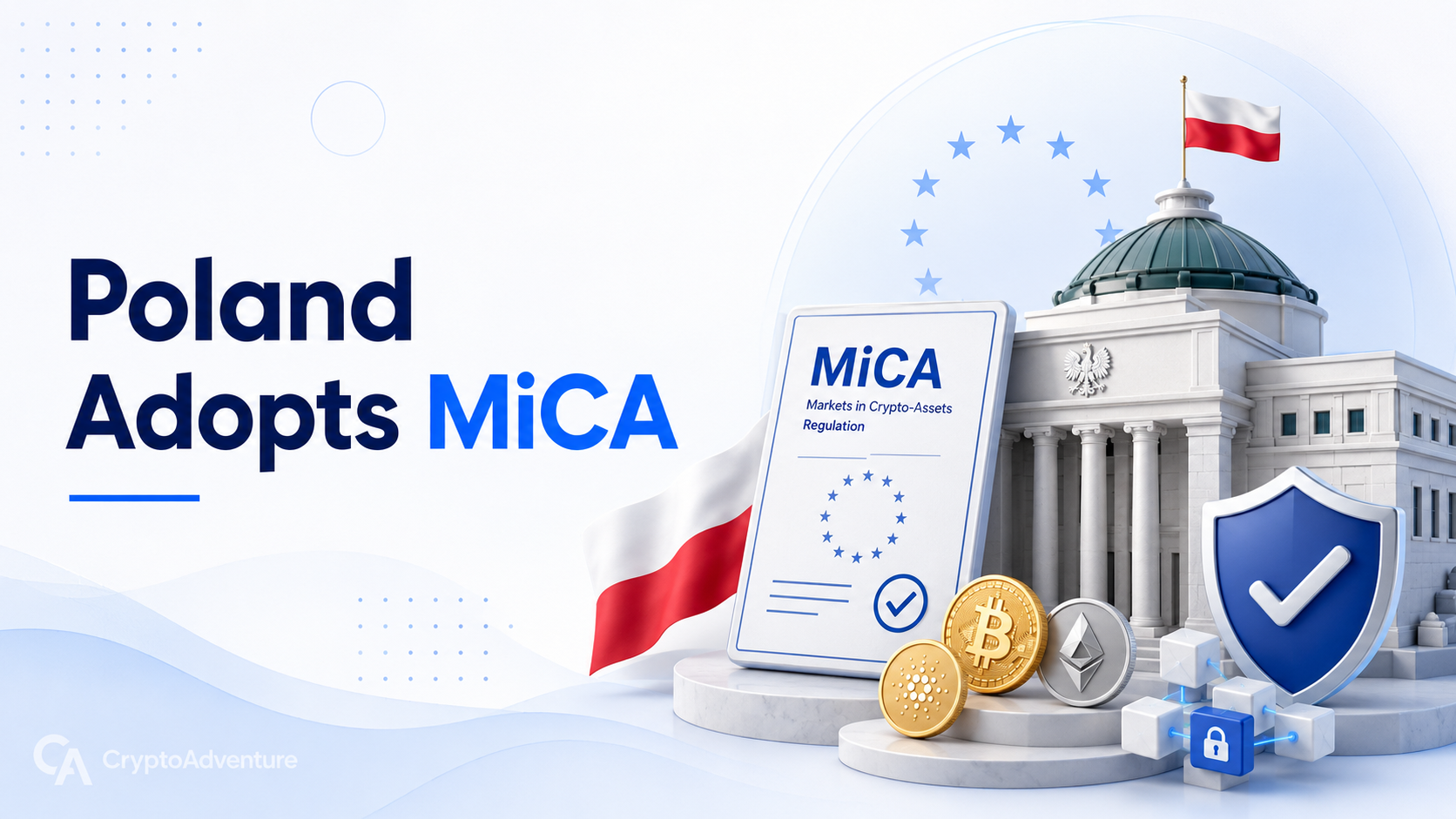
Poland’s lower house of parliament has approved a long-delayed crypto-assets bill that would place the country’s digital-asset market under the European Union’s MiCA framework and give the Polish Financial Supervision Authority broader enforcement powers.
The Sejm voted 241 to 200 in favor of the government-backed Crypto-Asset Market Act during its 57th sitting. The bill now moves through the remaining legislative process before it can take effect, keeping political risk in play even after Friday’s vote.
The measure is designed to implement MiCA’s EU-wide crypto rulebook inside Poland’s legal system, designate KNF as the main market supervisor and create local rules for licensing, controls and enforcement. Poland has been under pressure to finish the framework before the EU’s transitional period for crypto-asset service providers ends on July 1, 2026. Without a local supervisory framework, Polish firms risk losing a clear route to operate under the bloc’s harmonized crypto regime.
The Finance Ministry’s draft summary says the law would give firms registered in Poland a path to serve domestic users and operate across EU markets, while raising investor-protection standards and strengthening tools against fraud, abuse and sanctions evasion. That passporting logic is already shaping Europe’s market structure, with authorized providers using MiCA to scale across member states under a common compliance model.
KNF Would Gain Sanctions And Account-Blocking Authority
The strongest part of the bill is enforcement. KNF would gain powers to supervise crypto market participants, impose administrative sanctions and temporarily block money accounts, crypto-asset accounts or specific transactions. Earlier legislative text set out an initial 96-hour blocking window, with possible extensions under formal procedures.
The government proposal also increases penalties for unauthorized crypto services. The Finance Ministry said the draft raises the potential prison term for providing crypto-asset services without required authorization from five to eight years and raises the maximum fine from 5 million zlotys to 20 million zlotys. It also increases penalties tied to token offerings without an approved information document and obstruction of inspections.
Those powers are likely to remain the political fault line. Supporters frame the bill as a way to pull exchanges, custodians and other service providers into a defined supervisory perimeter before MiCA’s transition window closes. Critics have warned that broad blocking powers and heavy criminal penalties could push crypto companies away from Poland rather than bring activity into a regulated domestic market.
Across Europe, MiCA is already changing how exchanges, on-ramps and custodians present themselves to users. The same authorization-and-passporting model helped Ramp move EU activity under a MiCAR-authorized CASP structure, while broader user-facing changes from MiCA and DAC8 are pushing exchanges toward stricter licensing, disclosures and reporting.
Poland’s vote puts the country nearer to a MiCA-ready regime, but the practical impact will depend on the final law, KNF’s licensing process and how quickly existing providers can adapt before the July 1 deadline. For users, the clearest near-term change is not new token access. It is a market where account freezes, transaction suspensions, disclosure duties and provider authorizations become part of ordinary crypto oversight.
The post Poland’s Sejm Approves MiCA Crypto Bill Giving KNF New Blocking Powers appeared first on Crypto Adventure.