Bhutan NDI, Sierra Leone And SIGN Foundation Partner On Digital ID Platform
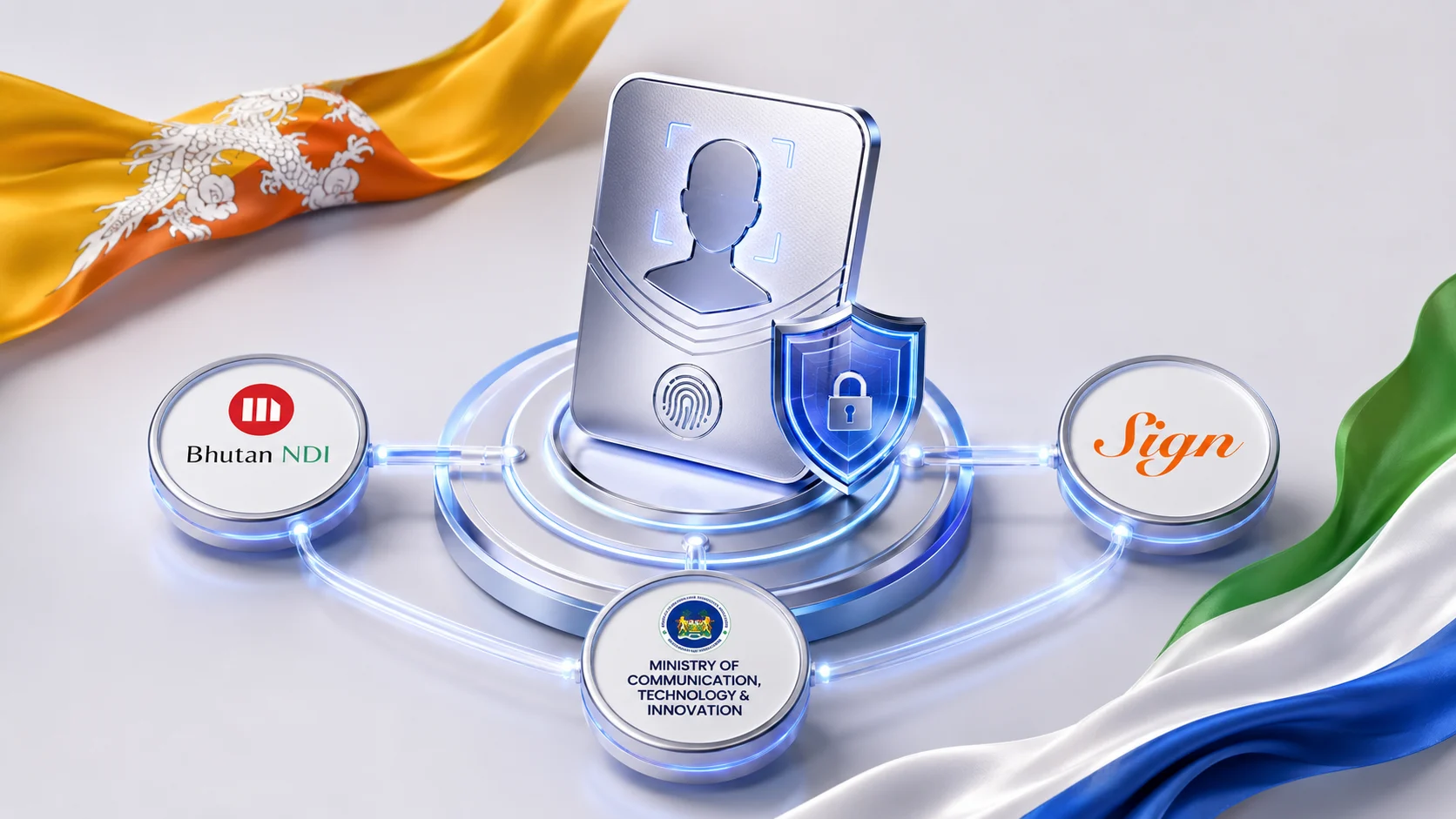

Bhutan National Digital Identity, Sierra Leone’s Ministry of Communication, Technology and Innovation and SIGN Foundation signed an MoU to build a national digital identity platform for Sierra Leone’s 8.5 million citizens.
The partnership will use Bhutan NDI’s open-source identity framework and W3C-compliant verifiable credentials, with SIGN Foundation leading system design and technical implementation.
The platform is being designed around secure identity proofing, credential issuance and citizen-controlled verification, giving Sierra Leone a framework for digital public services without relying only on physical ID documents or centralized database checks.
Bhutan NDI is a subsidiary of Druk Holding & Investments, the country’s sovereign investment arm. DHI lists Bhutan National Digital Identity as one of its technology projects, while the Bhutan NDI wallet lets users hold and present verifiable credentials for government and business services.
SIGN Takes Technical Implementation Role
SIGN Foundation will lead the platform architecture and technical build, while Bhutan NDI contributes the identity framework and operational experience from Bhutan’s national rollout.
The agreement includes knowledge transfer, institutional capacity building and a Joint Working Group to manage delivery. That structure gives Sierra Leone a formal implementation path rather than a standalone pilot or vendor-only deployment.
The project follows an earlier MoU between Sierra Leone and SIGN Foundation to build sovereign blockchain infrastructure, including national identity, a digital wallet and asset-tokenization systems. The new Bhutan NDI role adds a reference model from a national digital ID system already built around self-sovereign identity and verifiable credentials.
Government digital identity has become a wider blockchain-infrastructure theme this year. Estonia has been moving toward AI agent ID codes for digital government, while regulated institutions are also testing blockchain rails for public-sector and financial-market infrastructure through deals such as South Korea’s blockchain-based digital dollar bond.
Platform Built Around Verifiable Credentials
The Sierra Leone platform will use verifiable credentials that can be issued by trusted authorities and presented by citizens when they need to prove identity, eligibility or status.
That model differs from basic account-login systems. A credential can be checked cryptographically, while the user does not need to expose the full underlying data every time a service asks for proof.
For Sierra Leone, the identity layer can support access to government services, financial inclusion, public-benefit delivery and future digital-wallet systems. The MoU gives the Joint Working Group responsibility for turning the framework into a national deployment plan.





Post Comment
You must be logged in to post a comment.