Prediction Markets Hit Record $10.8B Week As Sports And SpaceX Fuel Breakout


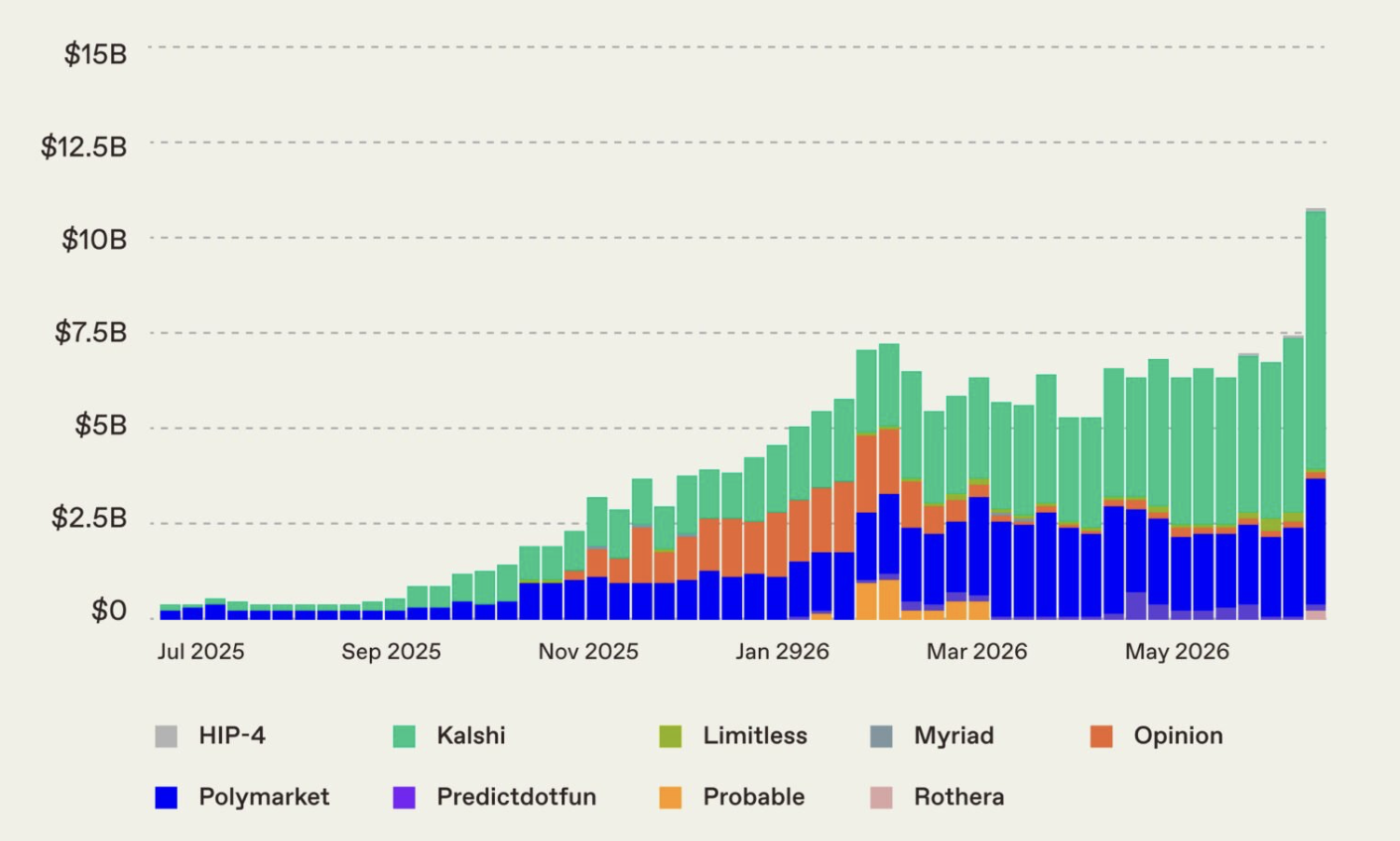
Prediction markets hit a record $10.8 billion in weekly trading volume for the week ending June 15, marking the largest week ever for event-contract platforms.
The a16z Crypto data snapshot also placed open interest near $1.5 billion, with both metrics hitting all-time highs in the same week. The volume surge came as several major events overlapped, including the SpaceX IPO, a U.S.-Iran peace deal, the NBA Finals, the Stanley Cup and the opening week of the World Cup.
That mix gave traders a rare cluster of high-liquidity events across finance, geopolitics and sports. Instead of one isolated catalyst, prediction markets had multiple front pages feeding order books at once.
A $10B Week Changes The Scale
The latest record shows how far the sector has moved in one year. A typical week in prediction markets was closer to $500 million a year ago, and even the strongest weeks stayed below $1 billion. The floor moved above $1 billion last fall, passed $4 billion by winter and reached the $6 billion to $7 billion range this spring.
The new $10.8 billion mark puts prediction markets closer to mainstream trading infrastructure than niche forecasting apps. A quiet week today can now exceed the biggest week from a year ago, giving platforms more liquidity, tighter pricing and larger positions across live events.
The growth is also changing who enters the market. Crypto-native users still trade politics, sports and cultural outcomes, but traditional finance is now moving into event-style contracts as a product category. Charles Schwab recently entered the race through Cboe-linked S&P 500 yes-or-no contracts, giving prediction-market mechanics a more traditional brokerage wrapper.
Sports And Finance Drive The Liquidity Surge
Sports helped carry the latest breakout. The NBA Finals, Stanley Cup and World Cup gave platforms a constant stream of settlement events, while SpaceX-related markets added a financial catalyst that moved across equities, tokenized stocks and crypto derivatives.
That overlap matters because prediction markets work best when events are simple, time-bound and emotionally traded. Sports outcomes bring frequent settlement. IPOs and geopolitical deals bring headline risk. Together, they create the kind of week where traders do not need to wait for one major election or one macro release to find volume.
The same sports growth is drawing political pressure. Gaming groups have pushed the Senate to ban sports prediction markets through the CLARITY Act, arguing that sports event contracts should not become a federally regulated workaround for state betting laws.
Record Volume Lands Beside Regulatory Pressure
The record week also lands while state and federal scrutiny keeps rising. Kentucky has sued Kalshi and Polymarket over alleged unlicensed sportsbook activity, while other states and foreign regulators have challenged prediction-market access on gambling, consumer-protection and licensing grounds.
That tension now defines the sector’s growth. Prediction markets are attracting billions in weekly flow because users want direct exposure to real-world outcomes. Regulators and gaming groups are pushing back because sports and event contracts increasingly resemble products already controlled by gambling, securities or derivatives rules.
The confirmed data point is clear: prediction markets reached $10.8 billion in weekly volume and nearly $1.5 billion in open interest during the week ending June 15, turning sports, SpaceX and geopolitical event trading into the sector’s largest liquidity week on record.